Most vision boards I see have good pictures and goals that are really wishes. “Be healthier”, “more money”, “a calmer life”. You can look at a line like that for a year and still not be able to say whether it happened.
A goal on a board needs three things you can check: a measure, a date and a first action. A wish has none of them, so it can never be marked done.
This guide shows how to turn each wish into a goal with a table, how many goals one board can hold, what to do with goals that are hard to photograph, such as love and food, and how to check the board once a month in 2026 without making it a chore.
Quick answer: vision board goals work when every picture carries one goal that can be answered with yes or no.
- Measure: a number or a clear state, not “more” or “better”.
- Date: a month and a year.
- Action: the first step, small enough to do this week.
- Count: three to five goals on one board.
- Check: once a month, with a page beside the board.
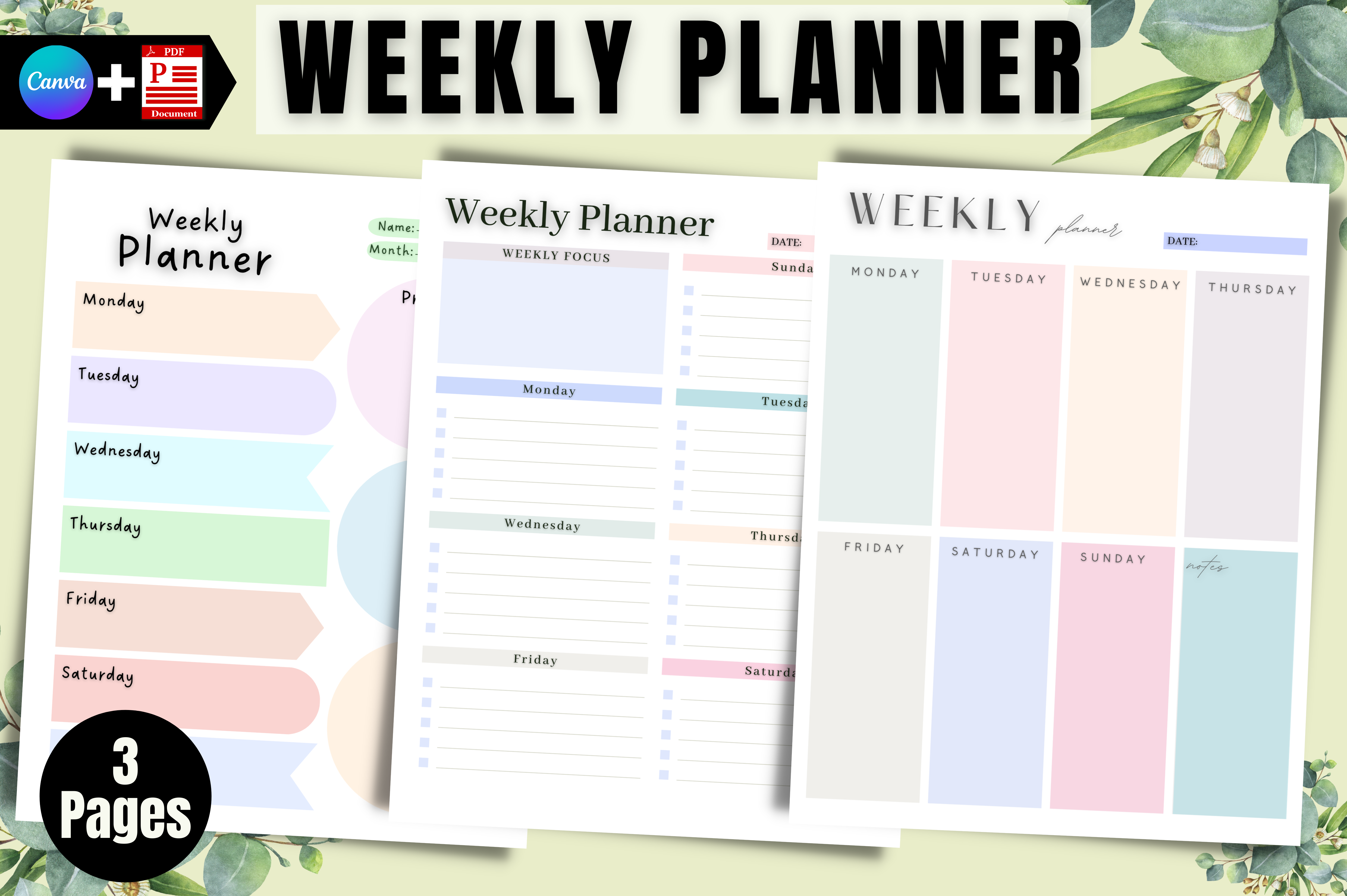
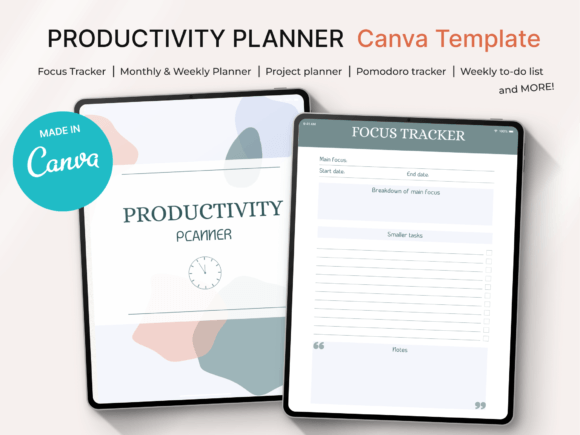
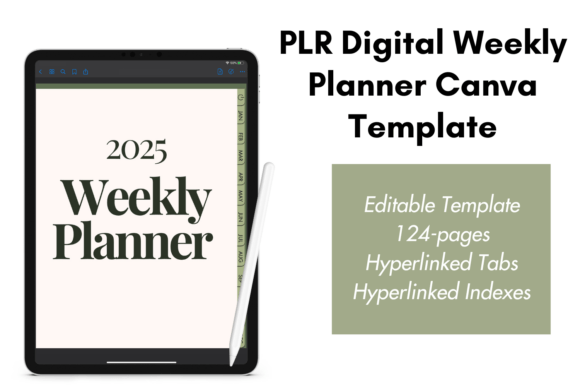
For a page that holds the measure, date and action, Weekly Planner Canva Template is an editable place to put them.
Vision board goals: a wish versus a goal you can check
A wish describes a feeling you want. A goal describes a state you can point at. The difference is whether someone else could look at your life in December and agree it happened.
“Travel more” is a wish. “Two trips booked by June” is a goal. The picture can be the same: a coast, a train window, a suitcase.
In vision board communities, goals come up in about three posts out of ten, and a deadline is named in roughly one of three of those. The number of goals on the board and the way to tell it is done are not named at all. That is the gap: the board holds the picture and the date at best, and leaves the measure out.
Two readers ask it outright, in their own words:
“Do you set specific goals first? Pick a theme for the month?”
Both that question and the one about sorting short-term from long-term goals have a plain answer, and it is the same one. I write the goal in a form I can answer with yes or no, and I pick the picture after. You can do the same in a few minutes.
- Wish: “I want to feel strong.” You cannot tell when it is done.
- Goal: “Three workouts a week through March.” You can.
The rest of this guide is that one rewrite, repeated for every area of the board. If you want the goal sheet open while you read, a Personal Planner Canva Template gives you blank lines for exactly these three questions.
Rewrite the wish: a table of before and after
Take each line from your board and run it through three questions. What would I see if it were done? By which month? What is the first thing I can do this week?
| Wish on the board | Goal you can check | First action |
|---|---|---|
| Be healthier | Three walks or workouts a week until June | Put the first three in the calendar |
| More savings | A set amount in one account by December | Open the account and name it |
| A better job | Ten applications sent by the end of March | Update the CV this weekend |
| Read more | One book a month, twelve in the year | Pick the first title |
| A calm home | One drawer or shelf cleared each week | Choose the first shelf |
| Learn a skill | Twenty minutes, four days a week, for three months | Book the first slot |
Notice what changed. The middle column always has a number or a yes/no state, and the right column is something you can do before the weekend. If the third column feels hard, the goal in the second is too big, so cut it in half.
The numbers here are examples of the shape, not targets for you. Change every one.
You can keep this table as a worksheet and fill it with your own lines. A Budget Planner Excel sheet does the same for any goal that has an amount.
How many goals fit on one board
Three to five. That is also what AI answers and planning guides tend to suggest when asked how many priorities to hold at once, and it matches what a board can show before it turns into a collage nobody reads.
The reason is not neatness. Each goal needs a picture, a measure, a date and an action, and each of those is something you will need to look at. Ten goals means forty things to keep in mind.
- Three: a board for a busy year, or for a first board.
- Four or five: one for each area you care about this year.
- More than five: split the board in two, one for the first half of the year and one for the second.
If you cannot choose, ask which goal would make the others easier. Keep that one, and move the rest to a list beside the board. They are not cancelled. They are waiting.
If you have not made the board itself yet, the vision board basics walk through the layout before you come back to the goals. I would keep a tracker sheet like To-Do List Tracker Template Excel open next to it, so you can see the count of goals and the count of actions in one place.
Vision board goals pictures: one picture per goal
The rule for pictures is simple: one picture, one goal. A picture that stands for three goals stands for none of them.
Pick the image that shows the goal done, not the effort. For “two trips booked by June” that is the destination, or a hand holding a boarding pass. For “ten applications sent” it is an open laptop on a desk, not a pile of paper.
- Write the goal first. The picture comes after.
- Search with the goal in words, not with the area. “Morning walk path” gives you a picture, “health” gives you ten.
- Choose one. If two are good, one goes to the next board.
- Put the measure under it in one short line.
This is also where a library of photos stops helping. Hundreds of ready pictures give you plenty to pick from and nothing to tell you which goal to write. The picture is the last step, not the first.
Choose it only when you can say the goal in one sentence. A free stock picture is fine for that. What it cannot do is hold the sentence, so you need a goal page beside it. Something like Planner and Calendar Canva Templates will do.
Pick goals by life area: career, money, health
An area is a drawer, not a goal. “Career” holds a hundred possible goals, and your board has room for one or two of them.
Pick the three areas that are loudest this year, then write one goal in each. The list of areas people usually start from is short.
- Career: a role, a skill, a project finished.
- Money: an amount saved, a debt cleared, an income step.
- Health: movement, sleep, a habit you can count.
- Home: a room, a shelf, a move.
- Learning: a course, a language, a book list.
- Relationships: time with a person, a habit you share.
I do not fill every drawer. A board with one goal in each of six areas looks balanced and moves nothing. A board with two goals in one area and one in another moves, because you can see where the weight is.
For the money area specifically, the money vision board goes deeper into splitting an amount across months. For a board that is mostly about looks, aesthetic vision board covers the styling, and I still write the goal lines before I touch the colours.
If you keep the goals on a weekly page, this weekly template has room for one line per area.
Vision board goals pictures love: how to show a relationship goal
Love is the area people search for most after the main phrase, and it is the one that most often turns into a wish. “Find love” has no measure, no date and no action, and a picture of a couple does not add any of them.
The fix is to write the goal about what you do, not what happens to you. You cannot schedule another person’s feelings. You can schedule your own part.
| Wish | Goal about your part | Picture |
|---|---|---|
| Find love | Two new social plans a month until September | A table set for friends, an event ticket |
| A closer relationship | One evening a week with no phones | Two cups on a quiet table |
| Heal after a breakup | A weekly session with a friend or a counsellor for three months | A bench in a park, an open diary |
A relationship picture works best when there is no face in it. A face invites you to compare. A table, a path or two chairs asks a question you can answer with an action.
Keep it to one relationship goal. It tends to attract the most pictures and the least writing.
I put the plan on a weekly page, such as a weekly planner template, so the two social plans a month are in the calendar and not only on the board.
Vision board goals pictures food: a habit you can photograph
Food goals fail on a board for the opposite reason. They are easy to picture and hard to measure. A plate of vegetables is a mood, not a goal.
The goal is the habit, and the habit is something you can count: how many days, how many meals, how many times a week. When you write it, keep the sentence under ten words, so you can say it without looking.
- Wish: “eat healthy”. Goal: “cook at home five dinners a week until June”.
- Wish: “less sugar”. Goal: “no sweet drink on weekdays for four weeks”.
- Wish: “drink more water”. Goal: “a full bottle finished before lunch, five days a week”.
For the picture, show the thing you do, not the result: the bottle on the desk, the packed lunch, the pan on the stove. A lunchbox photographed in your own kitchen tells you more than a stock salad.
Habits like these are easiest to follow when there is something to tick. A monthly habit tracker printable gives you a grid of days beside the board, so the count is visible without writing anything new.
The action step under each picture
This is the line that decides whether the board is a poster or a plan. Under every picture, after the goal, write the first action and the day it happens.
The first action should be small enough that you could do it today if you had the time. “Start a savings fund” is not an action. “Open an account and name it after the goal” is.
- Goal: the measure and the date.
- Action: one verb, one object.
- Day: a weekday and a time, or a date in the calendar.
Then keep the actions somewhere they can be ticked. A picture on the wall cannot be ticked, and a goal you cannot tick drifts back to being a wish.
Here is the limit of the free options. A saved picture, a photo library and a board template give you the image and the frame, and nothing in them has a place for measure, date and action side by side. That is why I keep a page beside the board.
- Weekly Planner Canva Template: editable in Canva, good if the board is already there.
- Planner and Calendar Canva Templates: a planner and a calendar in one set, for dates and the monthly check.
- All-in-One Digital Planner for GoodNotes: if your board and your planner live on a tablet.
Pick one. The page does not need to be pretty. It needs the goal, the day and a box.
Short-term and long-term goals on one board
Many boards mix a goal for this month with a goal for five years and then look confusing, because the two are not the same kind of thing. The month goal is a task. The long goal is a direction.
The simple fix is to give each goal a horizon and sort the board by it.
- This month or quarter: one or two goals with a measure you can finish.
- This year: two or three goals, each with a monthly step.
- Further out: one picture and one sentence of direction, no measure yet.
The long goal does not need a measure today. It needs a next step that is itself a short goal. “Own a small studio” becomes “Visit two studios by March”, and that second line goes in the quarter row.
For sorting the long goals by theme, mood board ideas shows six directions, and a goal for each direction is a good start.
This is also how a notebook can sit beside the board. The board keeps the picture and the direction. The notebook keeps the monthly and six-month goals, with the dates, and the long goal is split into short ones as it comes close. I use a GoodNotes planner for that on a tablet, and a printed monthly page when I want it on the wall.
Vision board goals 2026: a monthly check
A board you only look at in January gets forgotten by March. A check once a month, ten minutes with the page open, keeps it alive.
- Read each goal aloud: measure, date, action.
- Answer yes or no: was this month’s step done?
- Tick it on the page beside the board.
- Change one thing: the date, the action or the picture, never all three.
- Write next month’s action under the goal.
If the answer is no twice in a row, the goal is too large or the date is wrong. Cut the goal in half, or move the date by a month. Do not drop the board.
For the page, a printable grid keeps the monthly tick in view. A monthly overview sheet works for goals that have an amount, and the habit grid from the food section works for anything you repeat.
Vision board goals ideas 2026 usually start as a long list. You can keep the list, but put only the three to five that pass the table on your board. If your board is a 2026 one, the same check fits inside the 2026 vision board plan: twelve checks, one per month, and a review in December to see which goals moved to next year.
Vision board goals FAQ
What are some good goals for a vision board for 2026?
Good goals are ones with a measure, a date and a first action: a number of workouts a week, an amount in one account by a month, a count of applications sent. Pick three to five and sort them by area.
What are 5 good goals?
One for each area that matters this year, for example a health habit, a money step, a career step, a home project and a learning goal. Each one written as something you can answer yes or no.
Can you give me some examples of vision goals?
“Three workouts a week until June”, “two trips booked by June”, “ten applications sent by March”, “five home dinners a week for two months”. The table above has more.
How many goals should I put on a vision board?
Three to five. If you have more, split the board by half-year or keep the extras on a list beside it.
What pictures should I use for abstract goals like love or health?
Show an action or a place, not a result: a table set for friends, a walking path, a packed lunch. Keep faces out when the goal is about your own part.
How do I mix short-term and long-term goals?
Give each a horizon: this month, this year, further out. Keep the long goal as a picture and a sentence and turn its next step into a short goal.
How often should I check the board?
Once a month, with a page beside it. For ideas on the board itself, see vision board ideas, and for words under the pictures, positive affirmations. A page such as this monthly habit tracker keeps the check to a minute.
Key takeaways
- A goal on a board has a measure, a date and a first action.
- Rewrite each wish into a line you can answer with yes or no.
- Hold three to five goals on one board.
- One picture per goal, chosen after the goal is written.
- For love and food, write about what you do, and picture the action.
- Sort goals by horizon, and check them once a month.
For the page where the measure, date and action live, a weekly sheet such as Weekly Planner Canva Template is enough to start.