I hung one myself once, and a few months later the account looked the same. The board was not the problem. It said “save money” and nothing else, and a sentence like that cannot be missed, so it cannot be kept either.
A money vision board needs three lines under every picture: a number, a date and a monthly step. Without them it is wallpaper with banknotes on it.
This guide shows how to write those lines, how the board changes for saving, for paying off a debt and for earning extra, what to put on it, how to keep it pretty, and where the monthly number lives so it does not stay on the wall.
Quick answer: a money vision board is a board where each financial goal carries an amount, a deadline and the sum you move every month.
- Number: the full amount, written as a figure, not as “enough”.
- Date: a month and a year, not “someday”.
- Monthly step: the amount divided by the months, with a transfer day.
- Picture: what the money is for, not a pile of cash.
- Tracker: a page beside the board that records what you moved.
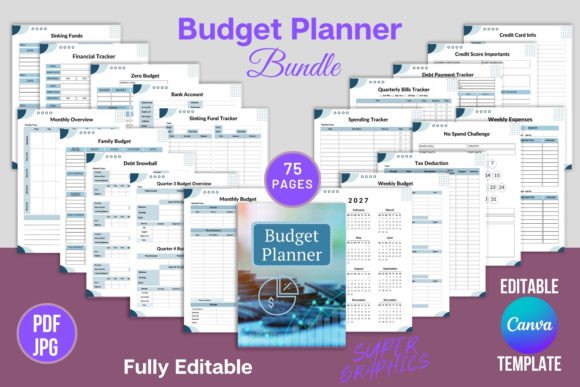
If you want that page ready-made, Budget Planner Monthly Budget Overview gives you the monthly and overview sheets to start from.
Money vision board: put a number, a date and a monthly step on it
The arithmetic is one division. Say you want 6,000 for a trip and a cushion by next December, and you start in January. That is twelve months, and 6,000 divided by 12 is 500 every month.
That 500 is the line your board was missing. It is small enough to move on payday and specific enough to check.
A board that says “travel fund” gives you a feeling. A board that says “6,000 by December, 500 on the 1st” gives you something to do on the 1st.
Everything below is a version of that one calculation, applied to three kinds of goal and kept somewhere you will actually look.
What a money vision board is, and what it adds to a normal board
A normal vision board is a set of pictures for the life you want. A money vision board is the same board narrowed to one area, with the figures added.
It usually holds one to three financial goals, each with a picture of what the money is for, and a short line with the figures.
- A normal board shows the result: a flat, a trip, a calm mind.
- A money board shows the result and the amount that gets you there.
- Both work only if you can see them often.
It does not replace a budget. It sits in front of one and makes the budget feel worth keeping. If you have not built the general board yet, start with the vision board basics, then come back and narrow it to money.
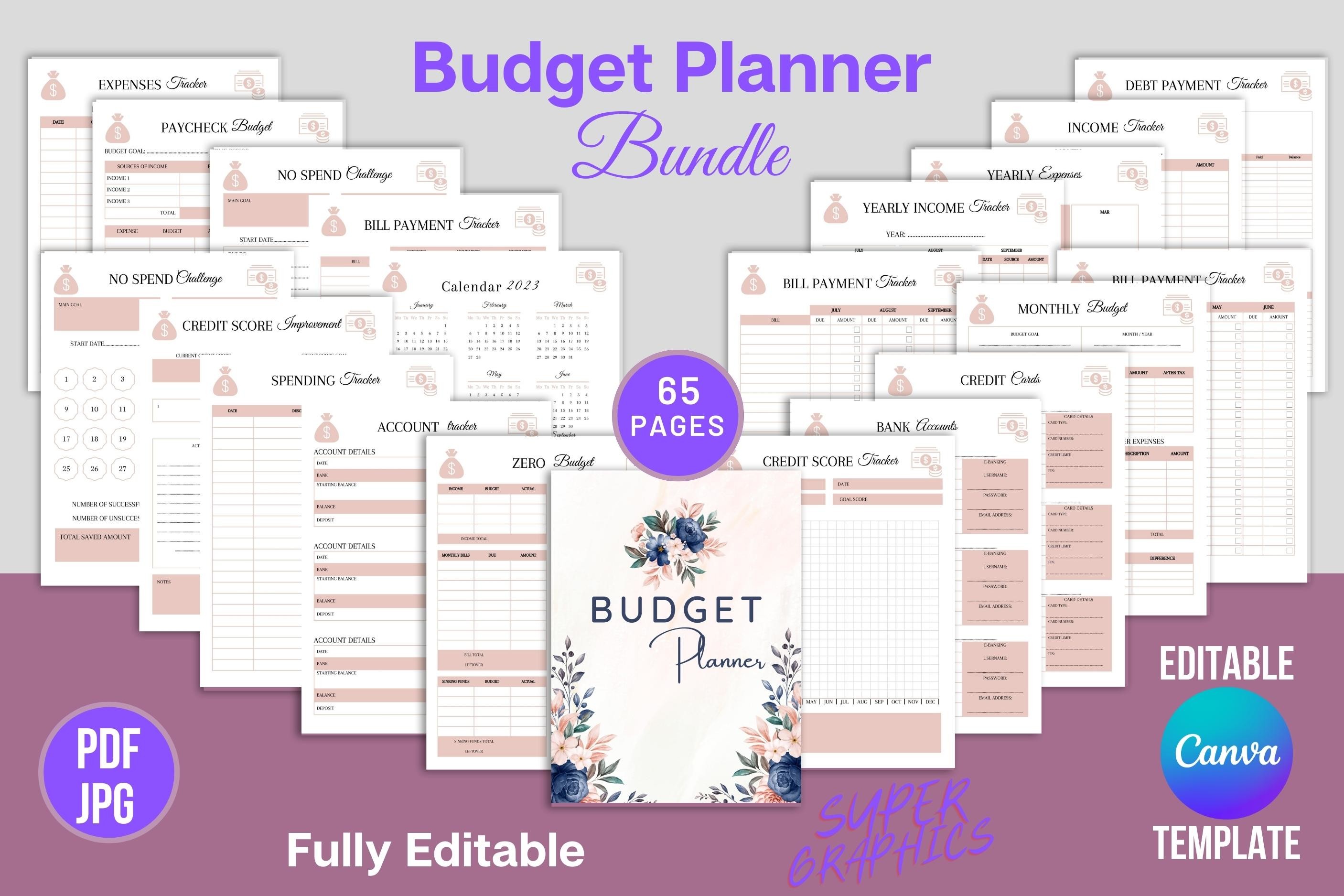
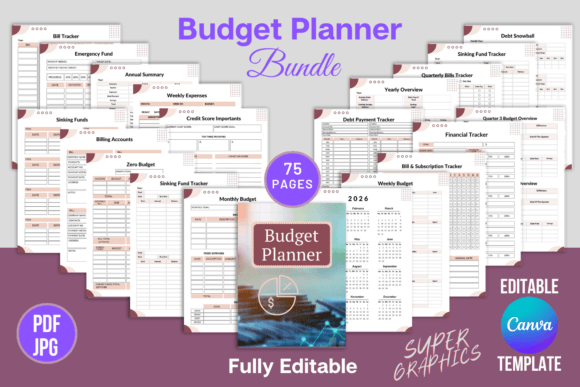
For the budget behind it, Budget Planner Bundle Canva Template is one way to keep it in the same Canva file as the board.
Think of it as the cover page of a financial plan: the cover is what you see when you walk past, and the plan behind it is what changes the balance. A cover with no plan behind it is a poster, and a plan with no cover tends to stay in a drawer.
Why a money vision board does nothing when it only says “save money”
Read what people write next to their boards and the same gap shows up. In the money goals shared on vision board forums, the amount is missing: “save money”, “extra income”, “the money”. Not one of them names a figure.
On personal finance forums it runs the other way. The same goal arrives as a number, with a deadline and a plan, and the words “vision board” are nowhere in the thread.
So the people who picture the goal do not count it, and the people who count it do not picture it. The board is half of the job and the spreadsheet is the other half.
“I fell rather stuck and don’t know if this is the best way to approach it.”
That is a real line from a board owner who wanted extra income and a course fund, with no amount and no date. It is not a lack of motivation. It is a missing sum.
Once the figure is on the board, being stuck turns into a question you can answer: how much a month, from when.
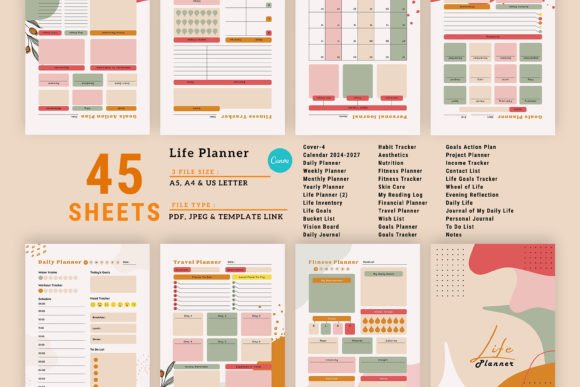
I now write the figure first and choose the picture second. A sheet like Ultimate Life Binder PDF has goal-setting worksheets for exactly that first step.
The three lines every money goal needs: number, date, monthly step
Write them in this order, under the picture, in your own handwriting or in a text box on a phone board.
- The number. The full amount, as a figure. If you do not know it, price the thing and round up.
- The date. A month and a year. The date turns a wish into a schedule.
- The monthly step. The number divided by the months left, and the day you move it.
I use a printable page with fields for goal, amount and date, such as Budget Planner Monthly Budget Overview, so the three lines are filled before I touch the picture.
Two quick checks make this honest. First, can you move the monthly step without touching rent and food? If not, lengthen the date, not the hope.
Second, does the date fall on a month you can name? “Next June” is a date. “Soon” is not.
Here is how the same three lines look for different goals.
- Emergency cushion: 3,000 by next June, 250 every month on the 1st.
- Trip: 1,800 by August, 300 every month for six months.
- Debt: 4,200 gone by next March, 600 every month on the 5th.
A savings vision board: one fund, one thermometer, one transfer day
Keep a saving board to one fund. Two funds on one board split the eye, and the monthly step gets blurred between them.
Put the thing the fund is for in the middle, the three lines under it, and a thermometer beside it that you colour in as the amount grows.
- One fund: the picture is what it buys or protects, not a stack of money.
- One thermometer: divided into the twelve steps, one per month.
- One transfer day: the date the monthly step leaves your account, ideally automatically.
If you make the board on a screen, a ready monthly page saves you drawing the thermometer. A set such as Budget Planner Bundle Canva Template has savings and monthly overview pages you can edit in Canva and place right beside the picture.
A debt free vision board that counts down instead of piling up
A debt board is the saving board turned upside down. The number goes down, so the picture should be the day the balance reaches zero, not the debt itself.
Show the total at the top, the date it ends, and a row of boxes, one per monthly payment, that you cross out.
- List every balance and add them into one figure at the top.
- Choose the end month and divide: that is the monthly step.
- Cross out one box each time you pay it.
A planner with bill and debt pages keeps the list in order. Ultimate Life Binder PDF includes a bill payment tracker and a finances and savings planner, which is enough to hold the balances behind the board.
An extra income vision board: the first milestone, not the dream
An income goal fails differently. The big figure, say a full second salary, is too far away to act on, so the board stays a dream.
Cut it to the first milestone you can reach and write that on the board instead.
- The milestone: a first monthly income of 100, not the final 3,000.
- The date: the month you want to see it arrive.
- The action: the one thing you do each week to get there, such as sending three offers.
A weekly action list fits on one page of Ultimate Life Binder PDF, next to the goal-setting worksheet.
When the milestone arrives, replace the number and keep the picture. The board grows with the goal and never has to be rebuilt.
What to put on a money vision board: the thing the money is for
A banknote is not a goal. It is the means, and your eye does not react to it for long.
Choose the picture by asking what the money will do the day it is there.
- Safety: a closed door, a full cupboard, a quiet evening without a notification.
- Freedom: a train window, a desk by the sea, an open weekend.
- A purchase: the exact item or place, not a general category.
- Relief: a clean sheet with zero at the bottom, for a debt board.
Print or place the picture on a page with room for the figures, for example a goal sheet from Ultimate Life Binder PDF.
Words on the picture can stay minimal: the name of the goal, nothing else, because the figures sit in the three lines below.
If you plan the whole year, the 2026 vision board page shows where a money goal sits among the other areas.
One picture per goal is enough. Two or three goals and three pictures make a board that reads in a single glance.
Money vision board aesthetic: make it pretty without losing the number
For ideas on the look itself, see the aesthetic vision board styles and the vision board ideas list.
A look keeps you coming back to a board, and that is a fair reason to care about it. The rule is that the look never covers the figures.
- Three colours for the whole board, one of them for the numbers only.
- One typeface for the three lines, large enough to read from the door.
- Space: leave a margin around each figure so it stands alone.
I keep mine to pale paper and one dark ink, and I find that the numbers read faster that way.
A neutral, quiet look suits money well: pale paper, one dark ink, one warm accent. It looks calm and it makes the numbers the loudest thing on the page.
Saving money aesthetic vision board: the quiet version for a phone
A phone board is one of the vision board ideas that costs you nothing but an evening.
The board you see a hundred times a day is the one on your phone. Make that version first and print later, if at all.
- One vertical page with the picture at the top and the three lines under it.
- The number in large type, because the lock screen shrinks everything.
- Set it as your lock screen and swap the picture only when the goal changes.
A saving goal on a lock screen costs you a second of attention at a time, which is exactly the point. It is a reminder, not a project.
Vision board money words: one sentence you can believe under each picture
Money affirmations are popular and mostly fail for one reason: the sentence is bigger than your belief. “I am a millionaire” while the account is empty makes you feel worse.
Use a sentence that is true today and points one step forward.
- “I move 250 on the 1st, every month.”
- “Six payments are crossed out, six are left.”
- “My first 100 arrives in March.”
If you want more sentences to borrow, the positive affirmations page has a longer set; I cut mine down to the ones I can say with a straight face.
Under each line, leave a small box on your planner page, such as the ones in Budget Planner Bundle Canva Template, and tick it when the sentence was true that month.
These are statements of what you do, and you can keep them every month. That is what makes a sentence believable.
The tracker beside the board: where the monthly number actually lives
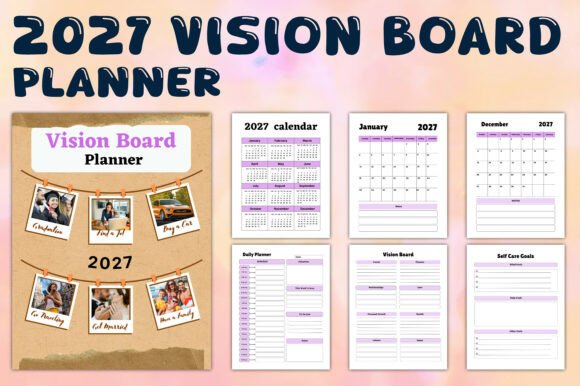
The board holds the promise. A separate page holds the progress. Without that page, the board cannot tell you whether you kept the promise.
A good tracker is small. It has the goal, the monthly step, a row for every month and a cell to mark what you moved.
- Goal and date copied from the board, so the two always match.
- Monthly rows with planned and moved side by side.
- Running total, so you see the thermometer fill without drawing it.
I have drawn this by hand and I have printed it, and the printed one is the one I kept up.
You can draw it yourself, but an editable page saves an evening. Budget Planner Monthly Budget Overview comes in A4, A5, Letter and Half Letter PDF, with monthly budget and overview pages, so it prints at the size of your board.
A five-minute money check on payday
Looking at the board every day does little. Checking it once a month, on payday, with the tracker open, does a lot.
- Move the monthly step before you spend anything else.
- Mark it on the tracker and colour the thermometer.
- Look at the date: ahead, on time or behind?
- Adjust one thing: the step or the date, never both at once.
I do mine at the kitchen table with the phone face down. Five minutes, once a month. The check is short on purpose, so it survives a tired evening, a busy week and a month when the transfer did not happen. A long ritual gets skipped; a five-minute one gets done.
If a month goes badly, you shift the date by a month and keep going rather than drop the board.
Mistakes that turn a money board back into wallpaper
- No figure: “financial freedom” with nothing under it.
- Too many goals: five funds on one board and none of them moving.
- A date you invented: nothing in your budget supports it, so you ignore it.
- Cash as the picture: no feeling attached, nothing to want.
- No tracker: the board stays on the wall while the account does what it did before.
- Never changed: the goal is reached or moved, and the board still shows last year.
I made every one of these mistakes on my first board, and I fixed them in an evening.
Most of these are fixed in one sitting with a pen: add the figure, drop to one goal, and put a page next to the board.
Money vision board FAQ
What should I put on a money vision board?
I put one to three goals, each with a picture of what the money is for, an amount, a date and a monthly step.
How do I make a vision board for money?
Choose the goal, price it, pick a month, divide the amount by the months, and write the result under a picture. Then add a tracker page beside it.
How do I make a money vision board on my phone?
Use one vertical page with the picture on top and the three lines in large type under it, then set it as your lock screen.
What is a money goal vision board?
The same board with the figures: each goal carries a total, a deadline and the sum you move every month.
Do money vision boards really work?
The picture alone changes little. The figure, the date and the monthly transfer are what move the balance, and the board keeps them in sight.
How often should I look at it?
I glance at mine daily on my phone and do the full check once a month. For a mood-style board, see mood board ideas. Daily on your phone is fine for a glance. The check that matters is once a month, on payday, with the tracker.
Can one board hold savings and debt?
Yes, and I do it with one line for each, but see this budget planner for the sheets. Keep it to two goals. A third one usually starves the first two.
Key takeaways
- Under every picture write a number, a date and a monthly step.
- The monthly step is the number divided by the months left.
- Keep one to three goals: one fund, one debt, one income milestone.
- Show what the money is for, not cash.
- Keep the look quiet so the figures stay the loudest thing.
- Put a tracker page beside the board and check it once a month on payday.
For the page that holds the numbers, a monthly overview such as Budget Planner Monthly Budget Overview is enough to start.