The board has been on the wall since January. You wrote in a notebook for a week, skipped a day, skipped three, and now both look the same as the day you made them. You are not sure whether anything moved, so you cannot tell whether to keep going.
That is the real problem with a manifestation journal. Most guides give you formats and prompts. Very few give you a place to see what changed. Without that place, the board goes quiet and the notebook gets dropped.
This guide shows how to start a manifestation journal, which format fits which problem, what to write in the morning and at night, and one page that makes the whole thing measurable.
Quick answer: a manifestation journal works when each goal has one page with three lines.
- What I did: one step, written as done.
- What moved: one thing that is different since last week, even a small one.
- What next: one step for the coming week.
- Check: read the “what moved” lines once a month and see if the board still fits.
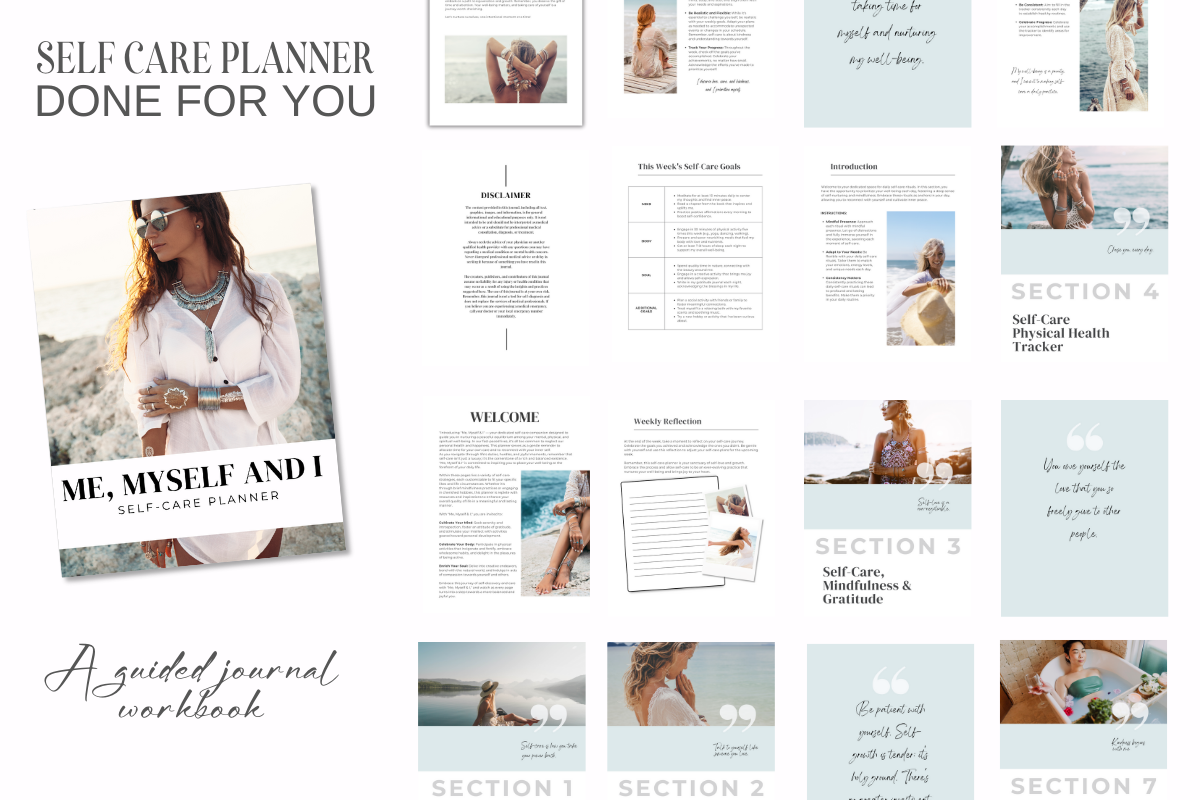
If you would rather not draw the page yourself, FREE Self Care Pages Printable PDF is a set of printable pages to start from.
Manifestation journal: what to write so the board does not go dead
A manifestation journal is a place to write what you want, in the present tense, and what you will do about it. Common versions use affirmations, scripting, gratitude lists or a number method such as 369.
The idea is simple: writing keeps your attention on what you want, and a written step is harder to forget than a thought.
The weak spot is the word “works”. In a set of 540 Reddit posts from this year on manifesting, 25 mention a journal, scripting or a diary. In six of them the writer lists everything she has tried and says nothing is moving.
One post reads, “I’ve tried everything: detachment, affirmations, subliminals, scripting, etc.” Not one of the six says how she would see a change if there were one.
That is the gap. A journal without a measure looks like failure on every ordinary day, because ordinary days feel the same.
A single page that records one small change a week turns “nothing is happening” into a list you can read.
The same shows up around vision boards. Of 33 posts about them, five ask whether it worked, and in three of those five the only thing the writer does with the board is look at it.
A board needs somewhere to write the next step. The journal is that place.
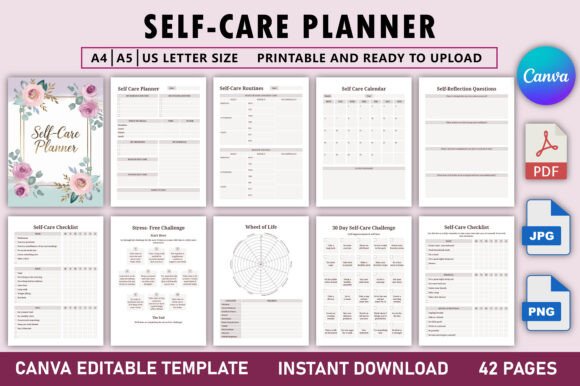
If you want pages ready to print, FREE Self Care Pages Printable PDF gives you blank pages with room to write, and Self – Care Planner PLR Canva Template is the same idea in Canva if you would rather keep the pages on a screen.
How to start a manifestation journal in ten minutes
Anything you can write on can become a manifestation journal. A cheap notebook, a printed page in a binder, a notes app or a document all do the job.
Pick whichever you will actually open. If you carry a tablet everywhere, a digital page beats a pretty book that stays at home.
Here is the shortest start I know:
- Pick one goal. Not five. One thing from the board that you would like to see move this month.
- Write it as already true. “I am saving a little every week” works. “I want to save money” does not, because “want” points at not having it yet.
- Write why it matters in one sentence, in your own words.
- Write one step you control this week. Not an outcome, a step.
- Leave a blank line under it for next week’s “what moved”.
That is the whole first session. Ten minutes, one page. Everything else in this guide adds to that page, and nothing replaces it.
One rule helps more than any prompt: write by hand if you can. It is slower, and slower is the point. A line you had to form letter by letter is harder to skim past than one you typed.
If you like to start with a printed page rather than a blank one, Junk Journal Folio Templates Mega Kit prints on your own paper and gives you folios and pockets to hold pages and notes.
It is a craft kit, so it suits a journal you want to look at, not a plain log.
For goals that sit on a board, the vision board goals guide helps you choose which one to write first.
Manifestation journal ideas: which format fits which problem
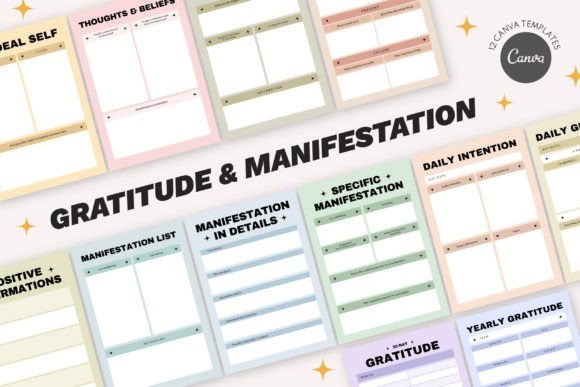
Most lists give you ten formats and leave the choice to you. It is easier to choose by the problem you have. Here are the common ones and what each does best.
- Gratitude or appreciation list. A list of what you are glad of right now. Best when you feel behind and everything looks like lack.
- 5×55. You write one intention 55 times a day for 5 days, in the present tense, changing the wording until it feels right. Best when you have a goal but it feels like a wish for the future.
- Morning intentions. Three ways you want to feel today and a few actions you feel inspired to take. Best when you start the day on autopilot.
- Evening reflections. What you liked about the day, one thing you want to feel into, and a worry you put down before sleep. Best when you lie awake going over things.
- Scripting. A written scene of your life as if it is already happening. Best when you feel off track or are new and do not yet know what you want.
- Dream log. Who, where, what and how it felt. Best when you want to catch what your mind brings up on its own.
Notice what is missing from the list: none of these tells you whether it is working. They are ways to write, not ways to check.
That is why the one-page measure in a later section matters more than the choice of format.
My own pick for most people with a board on the wall is morning intentions plus the weekly page. It takes a few minutes, it ties to action, and it does not ask you to believe anything you do not.
If you want the formats already laid out, Self – Care Planner PLR Canva Template gives you planner pages to edit in Canva, and FREE Self Care Pages Printable PDF is the printable route.
The manifestation vision board guide shows how to choose images so the goal you write about is also the one you see.
Manifestation journal prompts for morning and evening
Prompts are just questions that start the pen moving. Keep them few. A long list becomes a form you fill in, and a form is the fastest way to stop.
Morning prompts (two minutes):
- Three ways I want to feel today.
- One thing I am glad of right now.
- The one step I will take for my goal today.
- A believable line for today, such as “I can take meaningful steps even when I feel uncertain.”
Evening prompts (three minutes):
- What I liked about this day.
- What I did for my goal, written as done.
- One worry I put down now, and the first small thing I will do about it tomorrow.
- How I want tomorrow to feel.
Notice that both lists end with an action.
One question that keeps coming up in guides is “a possible obstacle and my plan”, and it is worth keeping: write the thing that might get in the way and an “if this happens, I will” line. It turns a vague worry into a step.
Keep the believable line honest. If a phrase makes you roll your eyes, shrink it until it does not. The positive affirmations guide shows how to swap a line you reject for one you can say.
For morning and evening pages you can print and keep in a folder, FREE Self Care Pages Printable PDF is a good place to begin, and Junk Journal Folio Templates Mega Kit suits a journal you want to keep and flip through.
Scripting in a manifestation journal, with a real entry
Scripting means writing how you want your life to be as if you are already living it.
It is useful when you feel off track, or when you do not yet know what you actually want. Writing the scene forces details, and the details show you what you care about.
It works in two parts. First a short list of what you want to bring in. Then a heading for each item, and under it a paragraph in the present tense. The key is the tense: “I am”, not “I will”.
Here is a small entry for a goal like “a calmer week”:
A calmer week. On Sunday evening I look at the week and it fits. I have three things that matter and I know which one comes first. On Monday I get up before the house is loud, make tea and write my morning lines. By Wednesday I have finished the thing I was dreading, and I notice that my shoulders are lower than they were on Monday. On Friday I close the laptop on time.
Notice what makes it work. There are sensations (shoulders, tea), there is a plain order of events, and nothing is huge.
A script about an enormous result is easy to disbelieve. A script about an ordinary good week is easy to follow.
End each script with one real step. A scene without a step stays a scene. “On Sunday I write down the three things” is a step you can do this week.
To see how a written scene turns into a board, the vision board basics shows where a few words belong next to pictures.
For scripting pages with room to write, Self – Care Planner PLR Canva Template gives you editable pages, and FREE Self Care Pages Printable PDF gives you blank ones to print.
The 369 method and 5×55 on paper: how the page looks
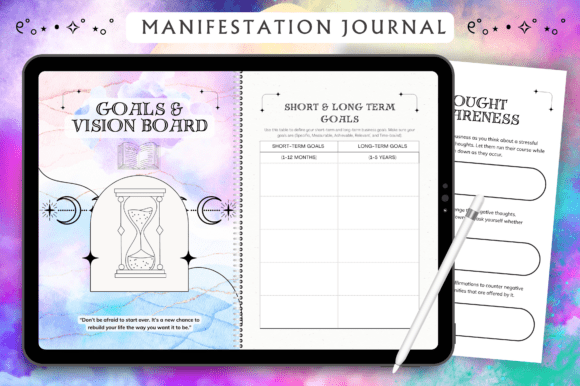
Both methods repeat one line many times. They differ in rhythm.
The 369 method. You write one intention three times in the morning, six times in the afternoon and nine times in the evening.
The page is a small block of identical lines, with a tick for each session. It takes about five minutes spread across the day.
5×55. You write one intention 55 times a day for five days. It is one long session, so the page is a full sheet of one sentence with its wording shifting a little as you go.
The point is to keep rewriting until the sentence feels true instead of far away.
Whichever you pick, set up the page so you can see your progress:
- Write the intention at the top, in the present tense and without “want”.
- Draw a small table with the days across the top and the sessions down the side.
- Tick each session as you finish it.
- Below the table, add one line: “What I noticed.”
The last line is the part most guides skip. Repetition alone tends to turn into a chore, and a chore is the first thing a busy week drops. A single line of noticing keeps a thread running through the repetition.
A caution I would give anyone: if a method feels like pressure, change it. Writing a line 55 times is a tool, not a test.
If you reach day three and feel dread, switch to the weekly page and keep the habit alive.
These blocks are easy to lay out in a template. Self – Care Planner PLR Canva Template lets you build a table once and reuse it, and FREE Self Care Pages Printable PDF gives you printed pages to write on.
One page per goal: how to keep short and monthly goals apart
A common reason journals die is that everything lands on the same page. A goal for this week, a goal for this year and a worry about Friday all sit in one block, and the page turns into a pile.
Give each goal its own page. A page has a header and three lines that repeat each week:
- Goal (header): one sentence in the present tense.
- What I did: one step, written as done, with the date.
- What moved: one thing that is different since last week.
- What next: one step for the week ahead.
Keep short goals and monthly goals on separate pages, or in separate colors. A short goal is something you can finish this week, such as “send the email”.
A monthly goal is something that needs several short ones. When they share a page, the short ones feel like noise and the monthly one feels like it never moves.
Three goals at once is plenty. If your board has twelve areas, the journal does not need twelve pages. Pick the three that matter most this month, and let the others wait on the board.
For money goals, the money and savings vision board shows how to attach a number and a date, which makes the “what moved” line easy to fill in.
A folio or pocket helps if pages multiply. Junk Journal Folio Templates Mega Kit prints folios and pockets that hold a month of pages, and FREE Self Care Pages Printable PDF covers the pages themselves.
How to tell the journal works: a check you can do in a month
Here is the check. It takes about ten minutes once a month, and it is the reason to keep the “what moved” line.
- Read the “what moved” lines for the month, one after another. Do not judge them yet.
- Count the lines that are not empty. Empty weeks are information too: they tell you the step was too big or the goal is not yours.
- Underline anything that came from a step you took. A message sent, a call made, a thing moved. Those are your results, even if the big result has not arrived.
- Ask one question about the goal: do I still want this? If the answer is no, cross it out. That is a real change too.
- Pick the next month’s step from the last lines you wrote.
The point is to replace “does it work?” with a question you can answer from the page: did something move because of what I did?
A journal does not guarantee an outcome. It shows what you did and what changed around it, and that is enough to decide whether to continue.
If three weeks in a row show nothing moved, do not add more methods. Shrink the step. A step you cannot fail to do, such as “write the first line of the message”, gets the pen back on the page.
Many people who say nothing is moving are looking for the big result and missing the small ones. The page makes the small ones visible, and small ones are how you know the direction is right.
For a place to keep the monthly check, Self – Care Planner PLR Canva Template gives you planner pages you can duplicate each month, and FREE Self Care Pages Printable PDF works as the printed version.
If you plan the year as a whole, the 2026 vision board page shows how to split it into months so each monthly check has its own target.
Journal and vision board together: where the next step lives

A board shows what you want. A journal shows what you did about it. Together they close a loop: the board points, the page moves.
Here is a simple way to link them:
- Number the areas on the board (1, 2, 3) and use the same numbers as journal page headers.
- Once a week, stand in front of the board for two minutes, then write the “what next” line.
- Once a month, after the check, move one picture: swap an image that no longer fits, or add a small image of the step you just took.
A dead board is usually a board that never changes. Adding one image of a finished step each month makes it a record, not just a wish.
After a few months the board shows both where you are going and where you have been.
If the board lives on your phone, the manifestation wallpaper guide shows how to keep it where you will see it, and the vision board ideas page shows how to give each area a picture, a number and a date so the journal page has something to refer to.
Lines to put on the board itself are covered in the manifestation quotes guide, which explains how to pick a line you believe.
For the paper side of the loop, Junk Journal Folio Templates Mega Kit gives you pockets to keep board clippings next to journal pages, and FREE Self Care Pages Printable PDF gives you the pages.
Blank notebook, free pages or a ready set
You have three ways to do this, and each fits a different person.
- A blank notebook. Costs nothing extra and suits people who like to draw their own pages. The cost is time: you set up each page by hand, and a messy page is an easy reason to stop.
- Free printable pages. Good for trying the weekly page before you commit. A free set is usually a few sheets, so check the paper size and whether you may print it for yourself.
- A ready set of pages. Saves the setup, gives you pages that match, and lets you reprint a sheet when you fill it. Check the licence to see whether you may print it and use it every day.
What a free text sample in an article cannot give you is the page itself: the lines, the margins, the date field and the room to write.
Those are what make a page easy to fill in, and the ones you design in a hurry are the ones you stop using.
My suggestion: try the weekly page on paper for two weeks. If you keep going, buy or print a set. If you stall, shrink the page, not the plan.
Options to start from: FREE Self Care Pages Printable PDF for printable pages, Self – Care Planner PLR Canva Template for pages you edit in Canva, and Junk Journal Folio Templates Mega Kit for a craft journal with folios and pockets.
The kit is a craft product, so it suits a journal you enjoy making, not a plain log.
If you want your journal to match the look of your board, the aesthetic vision board guide helps you choose colors and a style first.
Manifestation journal FAQ
How do I start a manifestation journal?
Pick one goal, write it in the present tense, add one sentence on why it matters, and write one step you control this week. Leave a blank line for next week’s “what moved”. That is a full first session, and FREE Self Care Pages Printable PDF gives you a printed page for it.
What should I write in a manifestation journal?
Three things: what you did, what moved and what comes next. Add a morning line and an evening line if you like. Write steps, not only wishes.
What are good manifestation journal prompts?
Three ways I want to feel today. One thing I am glad of. The one step I will take. What I liked about this day. A worry I put down and the first small thing I will do about it.
Does a manifestation journal actually work?
It does what writing does: it keeps your attention on a goal and records your steps. It does not promise an outcome. The monthly check on the page shows whether anything moved because of what you did.
What is scripting in a manifestation journal?
Writing a scene of your life as if it is already happening, in the present tense. Keep it ordinary and detailed, and end it with one real step.
How do I do the 369 method in a journal?
Write one intention three times in the morning, six times in the afternoon and nine times in the evening. Tick each session and add a line on what you noticed.
Is 5×55 worth trying?
It is worth a try if you like repetition. You write one intention 55 times a day for five days. If it feels like pressure by day three, switch to the weekly page.
Should I write by hand or type?
Whichever you will do. Hand writing is slower and keeps you with each line. If a tablet is what you carry, a digital page you open daily beats a book at home.
How often should I write?
A few minutes in the morning and evening is plenty, and the weekly page once a week. A short habit you keep beats a long one you drop.
What does a manifestation journal look like?
One page per goal. A header with the goal in the present tense, then three lines a week: what I did, what moved, what next. Add a morning line and an evening line if you want them.
How do I write a manifestation journal entry?
Start with the goal as already true, add one sentence on why it matters, then one step you control.
Example: “I am saving a little every week. This matters because I want a calmer month. This week I move a fixed amount on Friday.”
What is the best manifestation journal for beginners?
A plain notebook or a few printed pages. Beginners drop big guided books because the layout asks for more than they can give.
A short weekly page is easier to keep, and FREE Self Care Pages Printable PDF gives you one to try.
What are the best journaling manifestation methods?
Morning intentions with the weekly page suit most people. Scripting helps when you are off track, 369 and 5×55 suit people who like repetition, and an evening list suits a busy head. Self – Care Planner PLR Canva Template has pages for any of them.
What is the best manifestation journal app?
Any notes app where you can keep one page per goal. What matters is that you open it daily and that the “what moved” line sits next to the goal, not that the app is fancy.
What is the best manifestation journal on Reddit?
Reddit threads are useful for reading what people tried, but the posts mostly list methods, not brands. Writers who say nothing is moving rarely say how they would notice a change. The weekly page answers that.
What is a manifestation diary?
The same thing under another name: a daily or weekly record of goals, steps and changes. A diary leans toward the day, a journal toward the goal, and one page can hold both. FREE Self Care Pages Printable PDF has room for either.
Where can I get a manifestation journal?
You can use a notebook you already own, print pages at home, or edit a template in Canva. Printable sets such as Self – Care Planner PLR Canva Template save the setup.
How do I maintain a manifestation journal?
Keep the step small and the page short. Write three lines once a week and run the monthly check.
If you miss a week, write the next line and carry on, because a gap is not a failure. Junk Journal Folio Templates Mega Kit has pockets to keep spare pages in.
What should I do with an old manifestation journal?
Keep the pages with “what moved” lines filled in, because they show your own record. Recycle or tear out pages that hold only worries. Some people keep one page per year.
Which is best in 2026: a paper or a digital journal?
The one you open. Paper is slower and stays with each line. Digital goes where your phone goes. Either works with the same three lines.
Do I need to buy a manifestation journal?
No. A notebook or a printed page is enough. Printed pages such as FREE Self Care Pages Printable PDF save the setup, but they are a convenience, not a requirement.
Key takeaways
- A manifestation journal needs a measure, or every ordinary day looks like failure.
- Use one page per goal with three lines: what I did, what moved, what next.
- Choose the format by your problem: gratitude for lack, scripting for being off track, evening lines for a busy head.
- Check once a month: read the “what moved” lines, keep what moved, drop what no longer fits.
- Link the journal to the board by numbering areas and adding one image of a finished step each month.
For pages to start with, try FREE Self Care Pages Printable PDF, or build your own in Self – Care Planner PLR Canva Template.